
Last updated November 25, 2026








Free written scope consultation - allowances, timeline, and change-order rules on paper before a single trade is scheduled
Seasonal Construction Care for Roseville: Year-Round Homeowner’s Guide
Most homeowners in Roseville treat maintenance as a spring event: clean the gutters, hose off the patio, move on. That works fine in a place with evenly spread rainfall. Roseville isn’t that place. We get under 20 inches of rain a year, but almost all of it lands inside a roughly 90-day window. That means the caulk around your windows, the grout in your shower, and the flooring seam near the back door take more moisture stress in three months than many climates deliver across a full year. Then the heat arrives and pulls that moisture back out.
This guide covers what that cycle does to the materials inside a Roseville house, season by season, and what to check, seal, and adjust before each one arrives. We’ll walk through fall prep, summer heat management, a spring post-rain assessment, and the smoke and ash question that comes with living next to wildland. Then we’ll cover the warranty conditions most homeowners never read.
Quick Answer
Seasonal construction care in Roseville means focusing on moisture management, not insulation or snow load. The core three: seal exterior-adjacent joints and tile grout before the wet season, control indoor humidity and sunlight exposure during the hot months, and inspect kitchens and baths for moisture intrusion every spring. Each of these maps to a warranty condition on most cabinetry, countertop, and tile installations.
Styles & brands we work with
- Kitchen remodeling
- Bathroom remodeling
- Home additions & ADU
- Roofing
- Windows & doors
- Driveway & pavers
- Fence
Table of Contents
- Fall Prep: Sealing and Adjusting Before the Rain Arrives
- Summer Heat Management for Interior Finishes
- Spring Post-Rain Assessment Checklist
- Fire Season, Smoke, and Ash: What It Does to Finished Interiors
- The One Maintenance Task Each Season That Protects Your Warranties
- How This Plays Out Across Roseville’s Neighborhoods
- When to Call a Professional vs. What You Can Handle
Fall Prep: Sealing and Adjusting Before the Rain Arrives
Fall is the single most important season for a Roseville home’s interior durability. The compressed rainy season means water hits caulk joints, grout lines, and exterior walls hard and fast over a short window. Anything that’s already failing in October will fail worse by January. This is the time to walk the house and address it.
What to check, in order:
- Interior caulk joints at windows and exterior doors. Run a finger along the joint between the frame and drywall or casing. If the caulk is cracked, pulled away, or feels brittle, it needs to be cut out and re-applied. A failing caulk joint at a windward-facing window is the most common source of interior paint and drywall damage we see in Roseville.
- Grout lines in kitchens and baths, especially at floor-to-wall transitions. Cement-based grout at those joints will crack with normal expansion. Silicone or a matching sealant is the correct material there. If you’re looking at a cracked grout line at the base of a bathroom wall, that’s the right fix.
- Painted surfaces on the south and west exterior walls. Roseville’s sun exposure is severe during summer, and it degrades exterior paint on those walls much faster than the shaded sides. Feel for chalking or see if paint flakes off with a fingernail scratch. If it does, address it before the rain gets into the sheathing.
For tile work, the transition joints matter as much as the field. A properly built shower uses a movement joint at every wall-to-floor and wall-to-wall change, and the membrane underneath has to be continuous. This is where Schluter-system detailing earns its place: the waterproofing and the transition profile need to work together, and that’s a step that gets skipped in a lot of installs.
Summer Heat Management for Interior Finishes
Sustained outdoor temperatures above 105°F do real work on the inside of a Roseville house. The primary mechanism is thermal movement, not simply heat. Cabinets, countertops, and flooring all expand and contract at different rates. Where two materials meet, something has to absorb that movement. If nothing does, the materials fail at the seam.
What we watch for in Roseville homes during summer:
- Cabinet doors and drawer fronts out of alignment. Wood and thermofoil expand with heat and humidity. A door that doesn’t close flush in August usually isn’t broken; it needs a hinge adjustment. But if the gap is at the frame, it can indicate a cabinet that wasn’t shimmed correctly on install.
- Countertop sealant at the backsplash and wall joint. Silicone joints that fail silently. Engineered quartz from Caesarstone or any other brand doesn’t need annual sealing, but the joint at the wall does. Check for it once a year.
- Window-adjacent flooring. Sun exposure through a west-facing window can drive surface temperatures well above air temperature. Real hardwood at that exposure will move, and if it was installed tight to a wall or a fixed object with no expansion gap, it will cup or buckle. We’ve seen this specific failure in Roseville homes more than once.
- Indoor humidity. During summer, humidity in a Roseville house should stay in the 30-50% range. Below that, wood shrinks; above that, mold can grow behind a vanity or inside a cabinet. A cheap hygrometer on the kitchen counter is a worthwhile investment.
If your air conditioning is set aggressively and the house is dry, look for gaps at cabinet frames and tile transitions. A single caulk joint that opens up during a dry summer can let in air, and the dry-draw can lead to more movement than the material was designed for.
Spring Post-Rain Assessment Checklist
The wet season in Roseville is compressed, which means it can hide moisture intrusion. Water that gets into a wall or under tile doesn’t announce itself immediately. It becomes visible during the following hot season, when the moisture has had weeks to migrate and feed mold or degrade the substrate. Spring is the best window to catch evidence before the heat arrives.
Work through this list in April or May:
- Look for discolored grout or caulk in bathrooms. Yellowing, darkening, or a soft feel to a caulk line at the shower base or tub surround means water has been sitting behind it. That’s not a cosmetic issue; the waterproofing has likely failed.
- Check the base of kitchen cabinets, especially against any exterior wall. Look for swelling at the toe kick, warping, or a musty smell when you open a lower door. Water finding its way in through a failed exterior caulk joint often travels to the cabinet base first.
- Inspect drywall near windows and doors. Bubbling paint, a chalky line, or a slightly soft spot near the interior casing indicate slow moisture intrusion. If you can press a finger in and feel any give, get it looked at.
- Check the flooring at exterior door thresholds. Engineered wood, laminate, and hardwood all show water damage as swelling or cupping at the door threshold first. If you see it, the exterior door seal is the likely cause.
- Test the bathroom exhaust fan. Hold a tissue to the grille and see if it holds. A fan that’s moving air can’t remove moisture, and a bathroom fan that’s moving air poorly can still leave enough humidity to encourage mold behind the vanity or in the corners of the shower.
The floor-level inspection is the one homeowners skip. That’s where water shows up first, and it’s the simplest thing to check.
Fire Season, Smoke, and Ash: What It Does to Finished Interiors
Roseville sits in fire-adjacent geography. That reality affects more than what happens outside: smoke and ash become an indoor air and interior-material concern, and different materials absorb them differently. Ash is alkaline; it also contains fine particulate that settles into fabric and soft surfaces. Smoke odor compounds can cling to painted cabinetry and soft flooring for months after the event.
How smoke and ash interact with interior materials:
- HVAC filters. Change them more often during fire season. A clogged filter reduces air movement and lets ash enter the duct system, where it can recirculate through the house. This is a low-cost maintenance item that protects the whole system.
- Painted cabinetry and painted walls. Smoke odor settles into painted surfaces, and the porous surface of paint (even quality paint) will hold it longer than a sealed tile or stone. Wiping painted surfaces with a slightly damp cloth after a smoke event reduces the lingering smell. A fresh coat of quality paint is sometimes the right call if the smell persists.
- Soft surfaces and flooring. Carpet, upholstery, and fabric window treatments hold ash and smoke odor. Vacuum with a HEPA filter, and clean textiles you can clean. If the smoke smell is in the walls, it can be coming from soft materials that haven’t been addressed.
- Sealed stone countertops. Caesarstone, Silestone, and Cambria are engineered quartz, which is non-porous and largely unaffected by ash. Natural stone is different; if you have marble or granite, ash residue can cling to a scratched surface, so clean it promptly.
We’ve seen Roseville homes with smoke smell coming from cabinet interiors for months after a fire season event, and the fix was cleaning the interior and addressing a failed caulk joint that was letting smoky air in. The exterior of the house was fine; the interior was the issue.
The One Maintenance Task Each Season That Protects Your Warranties
Every cabinet, countertop, and tile manufacturer publishes maintenance conditions with its warranty. Most are short and clear: clean the surface with the right product, don’t let water sit in the joints, don’t cut on the surface, use a cutting board. But there’s one specific condition that shows up repeatedly, and it’s almost never mentioned at install: the requirement that the installer used the correct caulk or sealant at the joints between the countertop and the backsplash, the tile and the substrate, and the cabinet and the wall. If those joints weren’t properly detailed, the material warranty can be voided for causes related to water intrusion that came through those joints.
The seasonal tasks that protect those warranties:
- Fall: Cut out and replace failing silicone at the kitchen backsplash and the shower floor joint before the rainy season. A failed joint is a water path. The replacement has to be the correct silicone (100% silicone, not silicone-acrylic) to hold up.
- Summer: Adjust cabinet hinges and drawer glides before the doors begin to rack. Proper alignment prevents the door and drawer damage that can void a cabinetry warranty.
- Spring: Inspect grout and caulk for moisture evidence before the hot season begins. If you find evidence of water damage, address it with the tile installer if the install is still under warranty, and document it with photos.
- Fire season: Change HVAC filters on a schedule. Some HVAC equipment manufacturer warranties specifically require regular filter changes, and an air handler that’s clogged because of filter neglect can be excluded from the equipment warranty.
The simple habit: read the maintenance section of every product you buy and put the tasks in a calendar. If the warranty won’t cover a repair because a joint was never properly sealed or a filter was never changed, the cost of that repair lands on you. The maintenance itself is cheap. The repair is not.
How This Plays Out Across Roseville’s Neighborhoods
The seasonal pattern doesn’t change block to block, but the material exposure and the age of the housing stock do. Homeowners in older neighborhoods see different problems than homeowners in newer builds, and the fix depends on what’s actually installed.
What to watch for by area:
- Older Roseville homes (pre-1980s). Original tile in bathrooms has had decades to develop moisture issues at the shower pan and grout lines. The original grout was cement-based and the joints were sealed with silicone, which has a finite life. A spring inspection that finds soft spots in the tile around the drain is worth taking seriously.
- Newer construction (2000s and later). Homes in this era often use large-format tile and engineered hardwood. Large-format tile requires correct substrate and movement joint detailing to avoid cracked tiles. Engineered wood at window-adjacent exposures is vulnerable to seasonal movement. These are the two biggest issues we see in newer Roseville homes.
- Homes with west-facing kitchen or dining windows. Sun exposure is the biggest driver of cabinet and flooring movement. If a full wall of windows faces west, expect the material near that window to move seasonally, and make sure there are expansion gaps at the cabinet and floor perimeter.
- Homes next to open space or wildland. Fire-season smoke protection is more immediate here. Consider keeping windows closed on smoke days, changing HVAC filters more often during the season, and cleaning soft surfaces promptly.
The neighborhood itself doesn’t determine what fails; the materials and how they were detailed at install do. That’s why the most useful thing you can do is understand what’s in your house and how it responds to the seasonal cycle.
When to Call a Professional vs. What You Can Handle
Some seasonal maintenance is appropriate to do yourself, and some isn’t. Caulking around a window, changing an HVAC filter, and wiping down painted surfaces after a smoke event are all within reach for most homeowners. What isn’t: correcting a waterproofing failure in a shower, evaluating whether a caulk joint has failed behind a cabinet, and adjusting cabinetry that has racked because of seasonal movement. Those require looking behind the finish and knowing what the correct detail looks like. Our team sees a lot of “I fixed it myself” jobs that got worse. The right approach is to know the boundaries.
Common Mistakes to Avoid
- Treating the rainy season like a year-round phenomenon. In Roseville, the wet-weather damage almost always happens inside a compressed window, so the preparation window is narrow. Address the exterior envelope and the window caulk joints in the fall, not in the spring.
- Using the wrong caulk. Silicone-acrylic at the base of a shower, or standard painter’s caulk at an exterior window, will fail faster than the joint it was meant to protect. Match the material to the joint.
- Sealing engineered quartz like natural stone. Caesarstone, Silestone, and Cambria are non-porous and don’t need annual sealing. Sealing them with a natural stone product can leave a film. Clean the surface with the manufacturer’s recommended product and leave the sealing to natural stone.
- Ignoring hinge adjustments. A cabinet door that’s out of alignment will eventually damage the hinge plate or crack the door frame. This is a quick fix and a fast failure if it’s ignored.
- Leaving a soft spot in the tile around a drain. A shower pan that has failed can let water into the framing. The earlier you catch this, the less expensive it is to fix. The detection happens with a finger and a wet spot, not with a repair bill.
- Not maintaining the bathroom exhaust fan. A bathroom fan that’s undersized or failing is one of the most common reasons a bathroom gets moisture damage. It’s worth checking whether the fan is moving air and whether the duct is connected and vented outside.
- Skipping the fire-season filter change. An HVAC filter that clogs during fire season recirculates ash into the house and can lead to the equipment rusting or the blower motor running hot. Treat the filter as a seasonal item.
See the difference
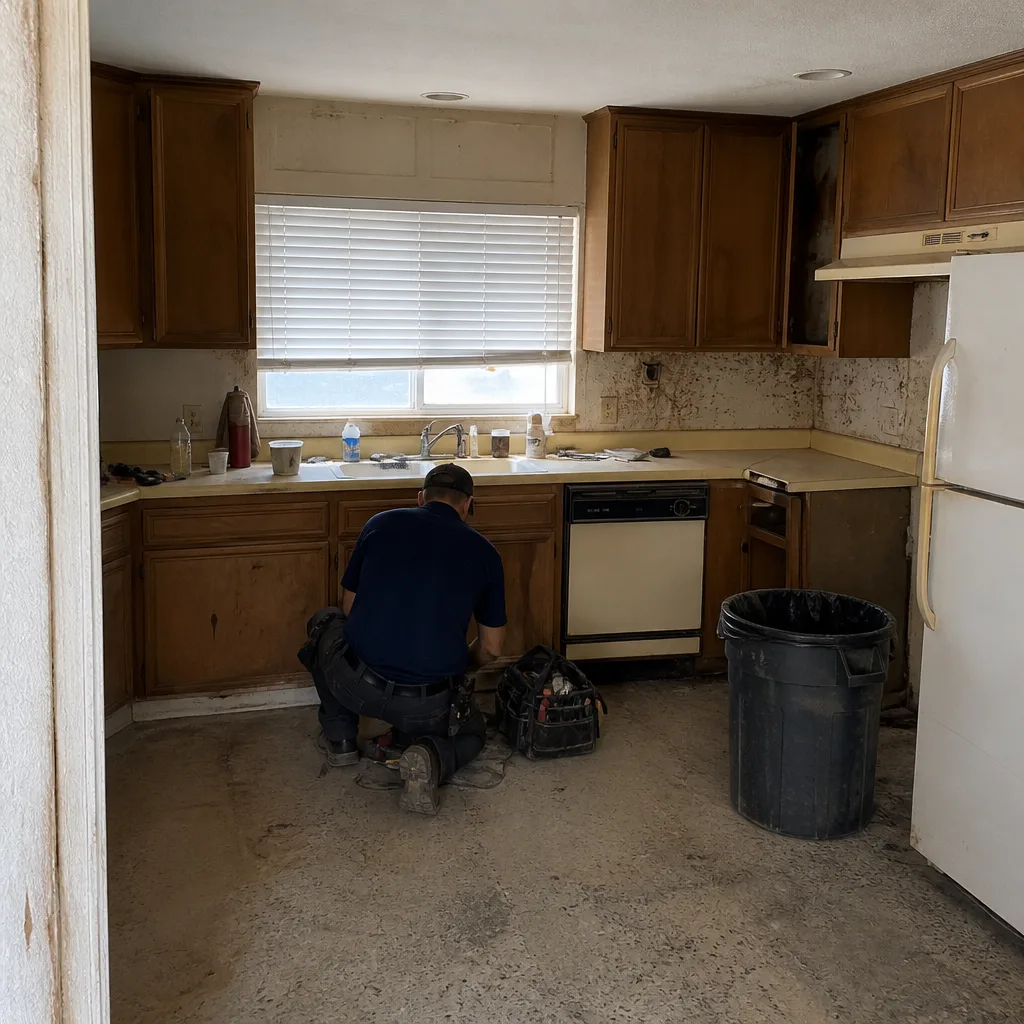 Before
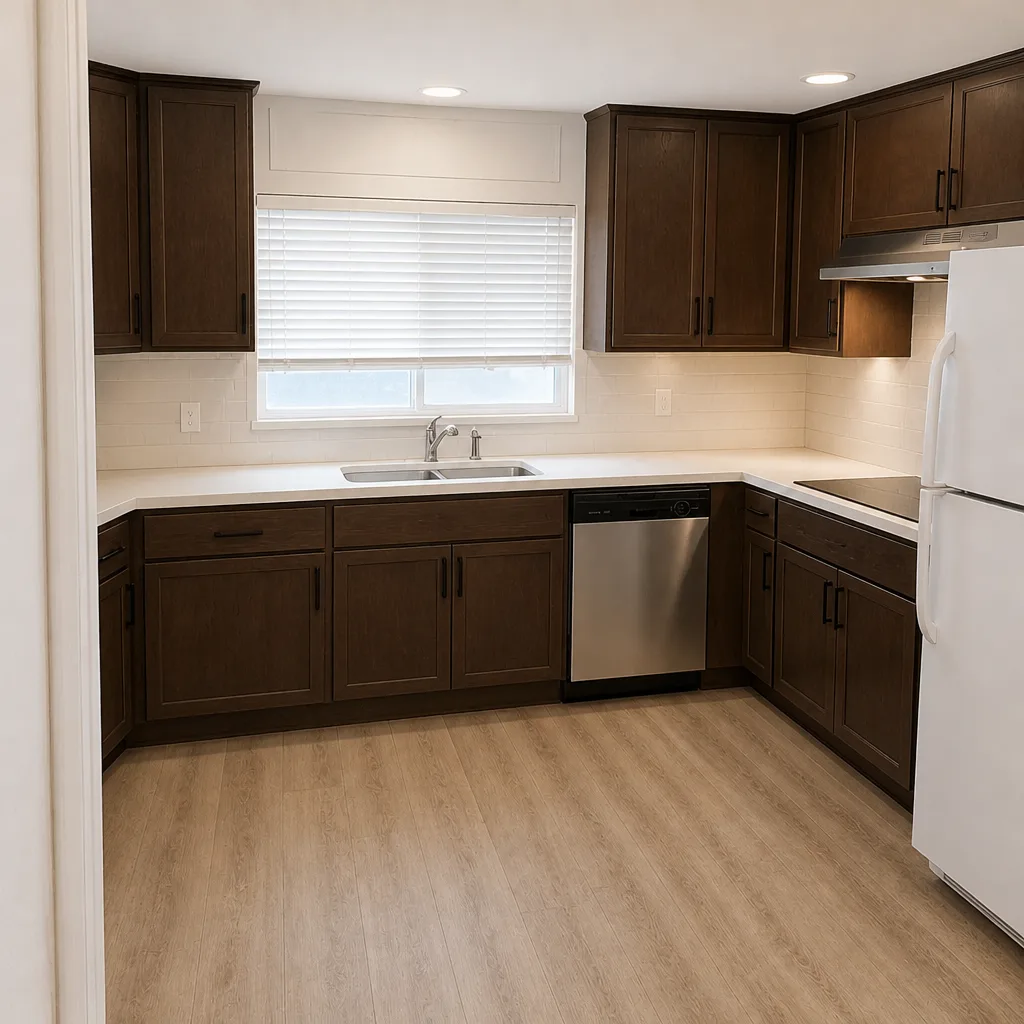 After
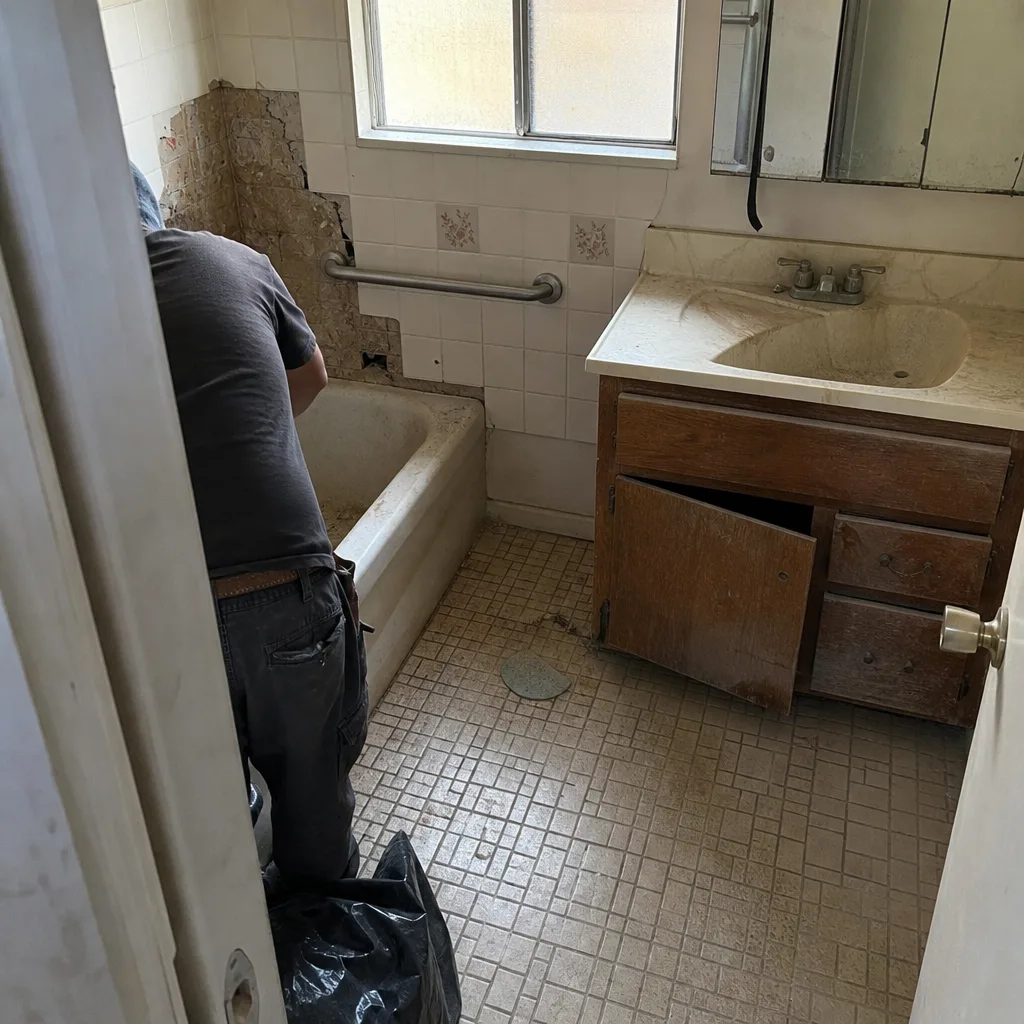 Before
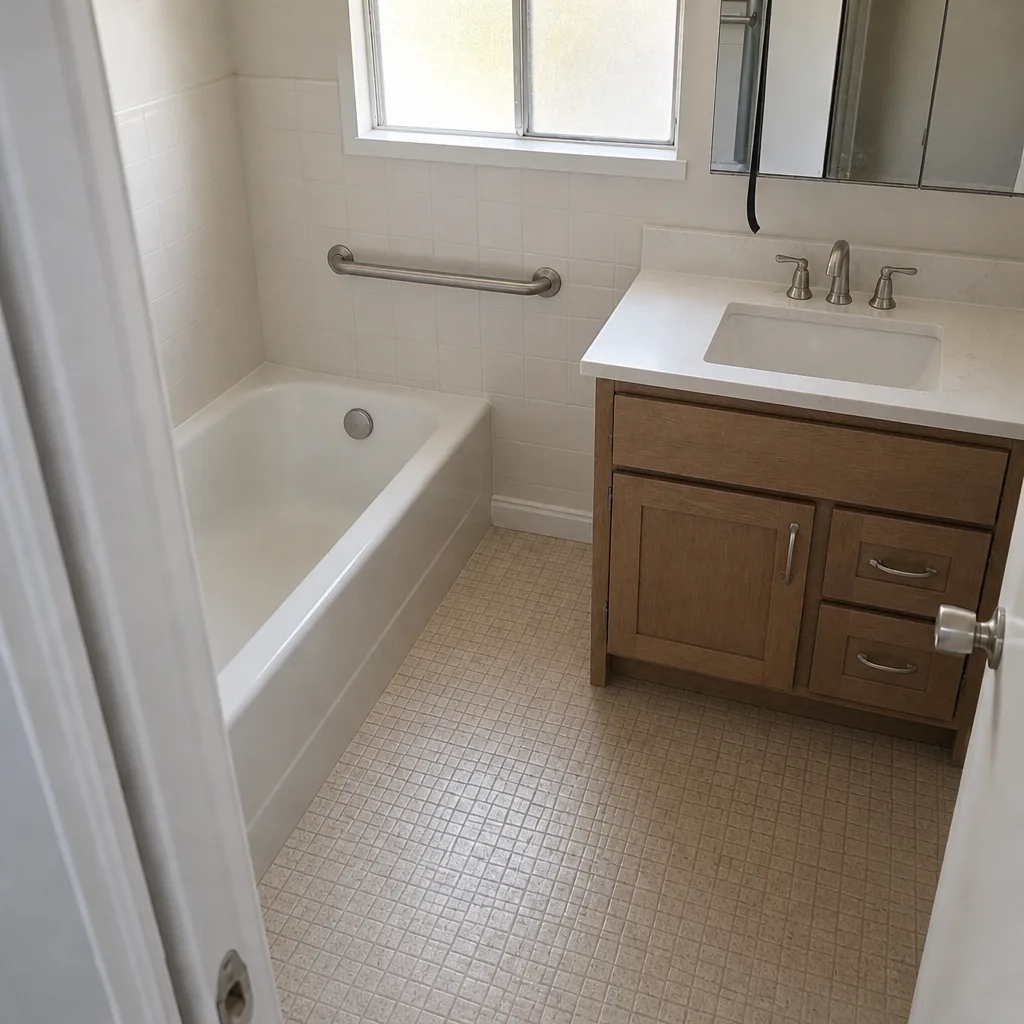 After
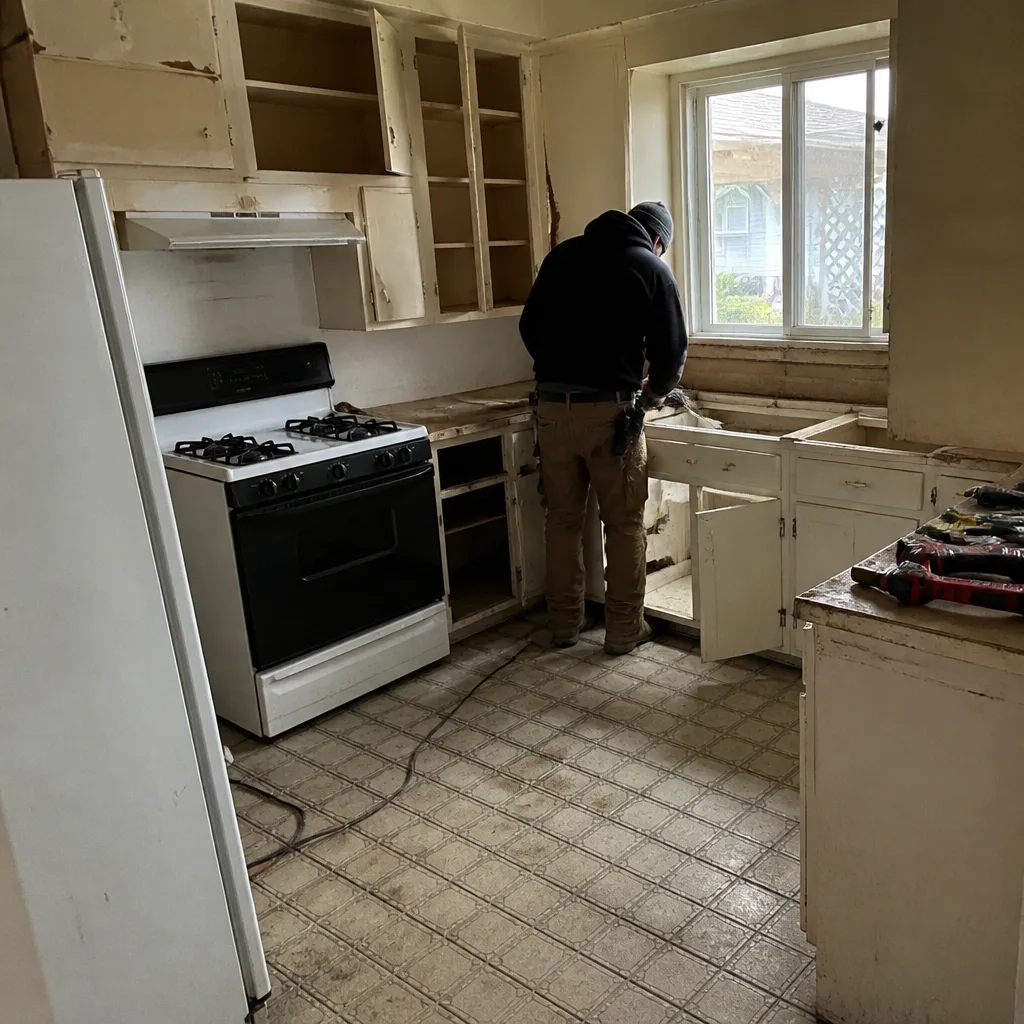 Before
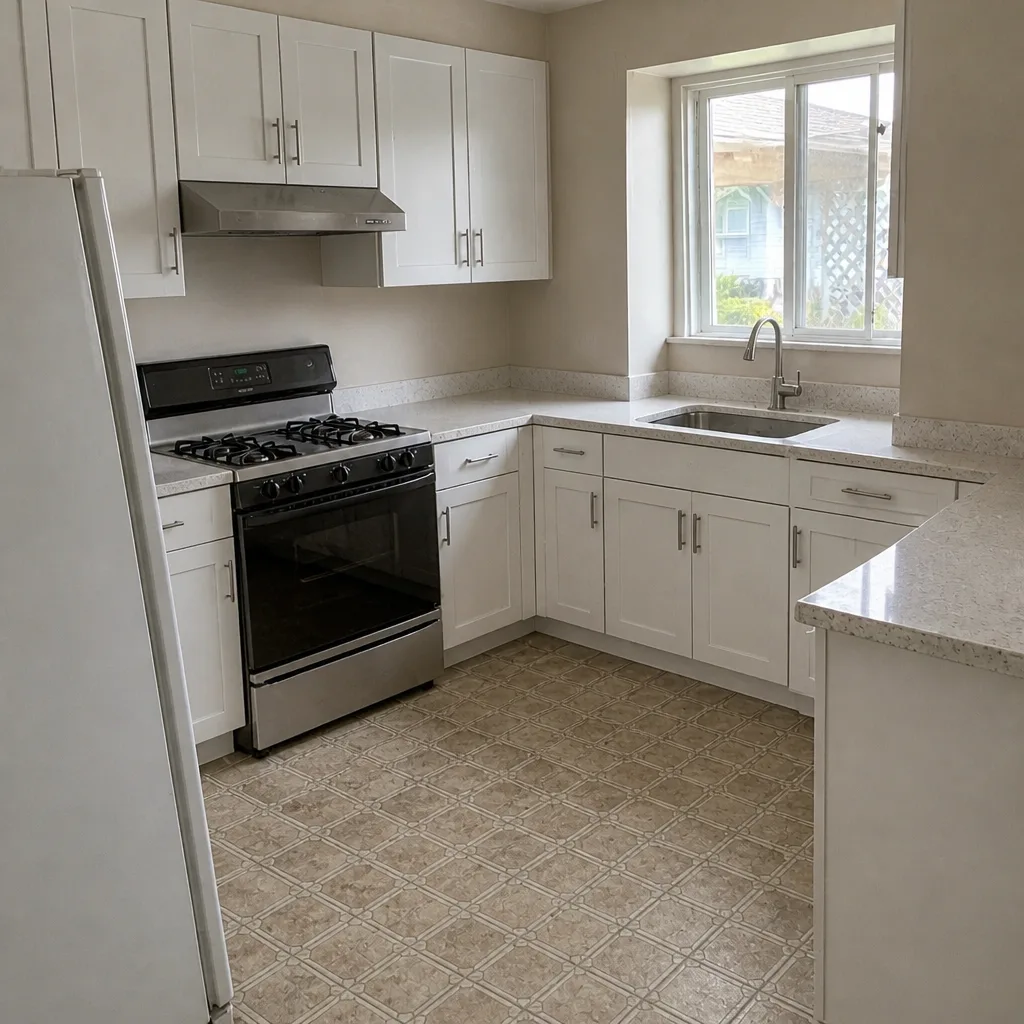 After
When to Call a Professional
Call a professional when the evidence points to moisture behind the finish, when a cabinet has visibly moved or is out of alignment beyond a hinge adjustment, or when a flooring transition has failed. If your spring inspection turns up damp drywall near a window, soft grout at a shower base, or a musty smell from a lower cabinet, get it looked at before the heat season compounds the problem. If you’re planning a full kitchen or bathroom renovation, the same seasonal logic applies to how the new materials are detailed. Roseville Remodeling Pros offers free estimates in Roseville for home remodeling, kitchen remodeling, bathroom remodeling, flooring, and interior and exterior painting. Call (279) 529-0232 to schedule your free estimate. We answer 24/7. Fast dispatch from 7am to 7pm, Sunday through Friday.
Frequently Asked Questions

Most of the fall and spring checks in this guide can be done by the homeowner at the cost of a tube of caulk and an afternoon. When a professional needs to correct a joint, replace a failed caulk line, or assess moisture intrusion, the price is set per job by a written estimate. Call (279) 529-0232 for a free estimate.
No. Engineered quartz from Caesarstone, Silestone, and Cambria is non-porous and doesn’t need annual sealing. Use a manufacturer-recommended cleaner, and address the caulk joint at the wall with the right silicone if it cracks.
Look for discolored or soft grout at the shower base and any soft spot around the drain. If pressing a finger into the caulk line or grout at the base feels soft, the waterproofing has likely failed. Schedule an assessment before the next rainy season.
Change it on the manufacturer’s recommended interval, and more often during fire season. Smoke and ash load a filter much faster than normal dust. An excessively clogged filter can be excluded from equipment warranties, so it’s worth treating as a scheduled item.
It depends on the joint. Field grout cracks are often excluded, but cracks at movement joints, wall-to-floor transitions, and shower bases can point to an installation issue. The correct detail uses flexible sealant at those joints. Call (279) 529-0232 to schedule an evaluation and free estimate.
Change the HVAC filter, wipe painted surfaces with a slightly damp cloth, vacuum soft surfaces with a HEPA filter, and clean any textiles that can be cleaned. If odor persists, the source may be interior paint or cabinetry surfaces, and repainting or refinishing can help. Call (279) 529-0232 for an estimate on interior painting.
The Bottom Line
Roseville’s seasonal pattern isn’t the same as coastal California and it isn’t the same as the mountains. The wet season is compressed, the summer heat is sustained, and fire season is a real part of the year. Homeowners who understand that cycle spend less on repairs and more on improvements. The core maintenance tasks: seal exterior-adjacent joints before rain, control humidity and sun exposure during summer, inspect for moisture evidence after the wet season, and maintain the HVAC filter through fire season. The materials in your home, whether it’s a Kohler or Moen fixture, a Blanco sink, or a Caesarstone countertop, each have their own maintenance requirement, and most of those requirements are warranty conditions. Find them, put them on a calendar, and follow them. That’s the whole system. When a joint fails or a material needs to be assessed, call a professional rather than guessing. Our technicians have up to 13 years of experience, and we’d be glad to look at your kitchen, bathroom, or flooring project with a fresh set of eyes. Call (279) 529-0232 for a free estimate. We answer 24/7. Fast dispatch from 7am to 7pm, Sunday through Friday.
To learn more about the full range of residential work we handle, visit Roseville Remodeling Pros. We work across home remodeling, kitchen remodeling, and bathroom remodeling, bringing the same seasonal logic to the material choices we recommend. If your project involves cabinetry, compare KraftMaid and Wellborn lines before you commit. If fixtures are on the list, ask us to compare Kohler and Moen options against Grohe, Toto, Delta, and American Standard, so the choice fits your budget and your plan. For countertops, we’ll walk you through Cambria, Silestone, and Caesarstone side by side. The right material, installed the right way, is the whole point.
Written by the team at Roseville Remodeling Pros.